
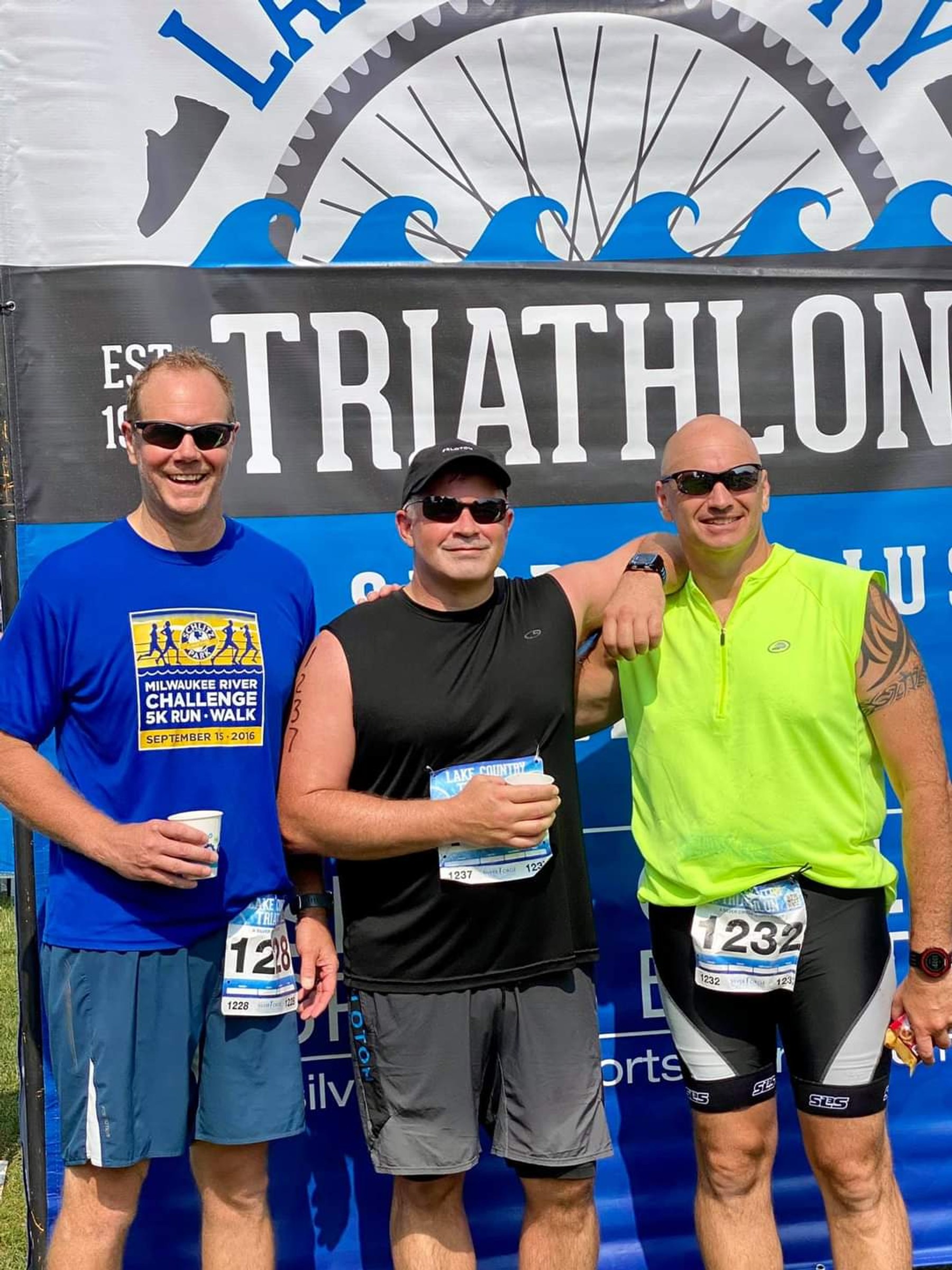
Finish lines are powerful things. They give effort a shape, make sacrifice feel justified, and tell us when discomfort has a purpose and when it’s allowed to stop. For years, my training revolved around them: races, events, and dates on the calendar that dictated when to push, when to recover, and what I was working toward. The finish line wasn’t simply a goal. It was structure.
That structure had been with me for a long time. It started with my first triathlon in my early thirties, and over the next two decades it became a constant. Marathons, half marathons, triathlons, Ironman events. By the time I turned 50, I had trained for and completed more than sixty races. Planning, building, tapering, recovering, and starting over again became a rhythm that organized effort, motivation, and progress for most of my adult life.
The last race I trained for was a triathlon on my 50th birthday. At the time, it felt meaningful, a milestone and a clean punctuation mark at the end of a long chapter of endurance events. What I didn’t think much about was what would replace it.
I didn’t intentionally stop training after that race. There was no announcement, no decision that I was finished, and no clear break from the past. I simply didn’t choose a new finish line. Without realizing it, the structure that had been pulling me forward for years disappeared, and over time everything began to drift.
When Structure Quietly Disappears
In the absence of a clear goal, what had once felt like a disciplined routine started to dissolve quietly. At first, it was easy to dismiss. A missed workout here, a skipped run there. Each decision felt small enough to be harmless, but those little negotiations with myself started to add up. Without a race on the calendar, there was less urgency and less reason to push through the days when working out didn’t sound particularly appealing.
Weeks became months. The treadmill sat unused. The weights stayed racked. Even tennis, something I genuinely enjoyed, became less frequent. As my fitness gradually declined, so did some of the enjoyment I got from being active. Things that once felt energizing started to feel harder and heavier. None of it happened dramatically, which made it easy to ignore for quite a while.
The Wake-Up Call That Actually Mattered
The biggest wake-up call didn’t come from a race result, a doctor, or a training plan. It came from spending time with my grandchildren.
Kids move constantly. They don’t wait for you to catch up, and they don’t slow themselves down because you’re tired. Keeping up with them takes real energy, not just for a few minutes, but for hours. I started noticing how quickly I tired and how often I defaulted to watching rather than joining in.
That bothered me. I don’t want to be a grandparent who experiences life from the sidelines. I want to be on the playground, on the floor, moving with them, not sitting on a bench waiting for them to circle back.
Once I started thinking about it that way, the idea expanded beyond my grandchildren. It became about the years ahead with our kids and with my wife, Lisa. We’re moving toward a stage of life where time may finally start opening up instead of being compressed by work, schedules, and all the responsibilities that dominate the middle years. I don’t see retirement as a time to slow down. I see it as a chance to travel more, experience more, stay active, and keep saying yes to things we finally have time to do.
But that version of the future isn’t automatic. Healthspan matters because energy, strength, mobility, and endurance create options. Not because I’m trying to win something, but because I don’t want to quietly remove experiences from my life because they’ve become too difficult. I want my body to expand what I can say yes to, not gradually narrow the list.
That was when I realized the thing I had lost wasn’t really discipline. It was a reason that felt important enough to train for. Races had provided that reason for years. Family gave it back to me in a very different form.
So What Did the Finish Line Become?
For a while, I assumed the problem was simply that the finish line had disappeared. Once the races stopped, motivation went with them. But the more I thought about it, the less accurate that explanation seemed.
The finish line hadn’t disappeared. It had changed. What I had really lost was a way to measure progress that felt meaningful. Races made that easy. They gave effort a deadline, made training intentional, and created an obvious relationship between the work and the outcome. Without that structure, it wasn’t clear what I was training toward, and without a meaningful “toward,” effort became much easier to negotiate away.
Around that time, I was exposed to a different way of thinking about training, one that puts less emphasis on preparing for a single event and more emphasis on preserving long-term capability. Instead of asking what you’re trying to accomplish three months from now, the question becomes what you still want to be able to do ten, twenty, or thirty years from now.
That idea stuck with me because it changed the question. Instead of asking, What race am I training for? I started asking, What do I want to still be able to do?
The answers were pretty concrete. I want to move well as I get older. I want to remain competitive on the tennis court, not just show up. I want to travel with Lisa without wondering whether my body can keep up with what we want to experience. I want strength, balance, and endurance to be tools that give me more options rather than limitations that quietly take them away.
A close friend getting back into tennis didn’t hurt either. I knew a match was coming eventually, and that gave me another reason to start preparing.
Those goals began to feel like finish lines of a different kind. They don’t come with dates on a calendar, there’s no medal at the end, and there isn’t a moment when you’re officially finished. But they reconnect effort to something that matters, and that gives training a purpose again.
Where the Work Points Now
Training looks different for me now. There’s no countdown to race day and no external signal telling me when I’m ready or when I’ve completed the assignment. Progress is quieter, and in some ways harder to define.
What I pay attention to now is whether the work supports the life I want to keep living. Can I stay engaged with my grandchildren as they grow? Do I have the energy to travel with Lisa and experience places fully instead of cautiously? Am I building enough strength, balance, and endurance to keep giving myself more options instead of fewer?
Those questions aren’t answered by one event or one training block. They require consistency without applause, effort without a finish tape, and patience with progress that unfolds over years instead of months.
I’m still figuring out what this version of training looks like. I’m still learning which numbers are useful, which habits are worth keeping, and how to measure progress when the finish line isn’t something I cross but something I preserve.
But I no longer feel like the finish line disappeared. It changed. And learning how to train for that version of it feels like a chapter worth staying in.
Looking Back From Here
When I originally wrote about this in early 2026, I was mostly trying to understand why my relationship with training had changed. Looking back now, I can see that the question was much bigger than training. It was really about capability.
What can I keep doing? What do I want my body to let me say yes to? Which things are actually worth measuring? Which ideas are worth experimenting with? How do I stay curious about all of this without pretending I have every answer?
Those questions eventually became part of the foundation for Lipusch Resilience. The idea is simple: research something that seems promising, try it in real life, measure what’s useful, and share what happens.
Not every experiment will produce a breakthrough, and some won’t work at all. But if the larger goal is to stay capable, engaged, and curious about the years ahead, that feels like work worth doing.
This is Jeremy's experience, research and interpretation—not medical advice. The point is to share the experiment, not hand out a universal answer.