
DEXABODY COMP
RESULTS TO DOCUMENT
Body composition
I have real DEXA history and meaningful changes to unpack. The next step is turning the numbers into a useful experiment record.
RESEARCH · TRY · MEASURE · SHAREOn deck
The internet has enough theories. This is where ideas get dragged into real life, tested against a normal schedule, measured when useful and reported without pretending every experiment works.
A living list of what I am actually testing, what got interrupted and what I want to investigate next.
 TRAINING
The weighted-walking experiment was interrupted by a broken toe. Recovery comes first, then I plan to restart in early November and keep measuring.
 STRENGTH
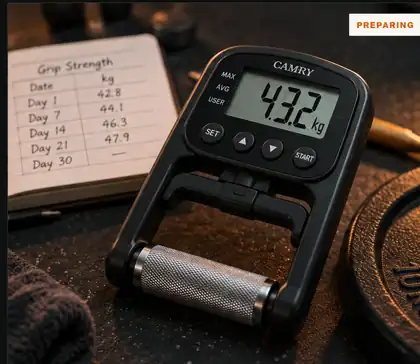
Can 30 days of consistent dead-hang practice improve my measured grip strength and maximum hang time? The dynamometer is ordered. Baseline comes first.
I have real DEXA history and meaningful changes to unpack. The next step is turning the numbers into a useful experiment record.
What is worth doing to preserve and potentially improve the engine that keeps more of life available to us?
What is the minimum effective strength practice I can actually sustain for years instead of weeks?
Which controllable behaviors reliably change how recovered I feel and how ready I am to perform?
Start with something specific enough to learn from.
Understand where things stand before changing them.
Try the idea long enough to generate a useful signal.
Share the result, including the messy parts and dead ends.
If an experiment looks great on paper but doesn't survive work, family, travel, tennis, bad weather and ordinary life, that is part of the result.
The outcome I'm most interested in isn't a perfect score. It's capability: being able to keep doing more of the things that make life interesting.
That is why the lab can include strength and aerobic capacity next to sleep, body composition, wearables, rucking and whatever else seems worth testing next.
Some experiments will work. Some will disappoint. Some will get interrupted because real life wins. All three outcomes can teach us something.